
Introduction
A comfortable home does not require expensive furniture, a professional designer, or a complete renovation. Sometimes, the right paint color, better lighting, or a thoughtful furniture arrangement can make a room feel entirely different. DecoratorAdvice.com is a home décor and improvement blog that shares ideas for interior styling, home exteriors, DIY projects, and everyday living. Its content can help readers explore different design approaches and plan improvements. The key is to choose ideas that suit your space, lifestyle, and budget rather than following every decorating trend you encounter.
Quick Answer: What Is DecoratorAdvice.com?
DecoratorAdvice.com is a home décor website featuring interior decorating inspiration, exterior design ideas, and practical home tips and guides. Its content is intended to help readers make their homes more attractive and functional. Visitors can explore its categories for inspiration, then evaluate individual recommendations before investing in products or starting renovation work. citeturn186977search0
What Is DecoratorAdvice.com?
DecoratorAdvice.com is an online resource for people interested in making their living spaces more attractive, comfortable, and practical.
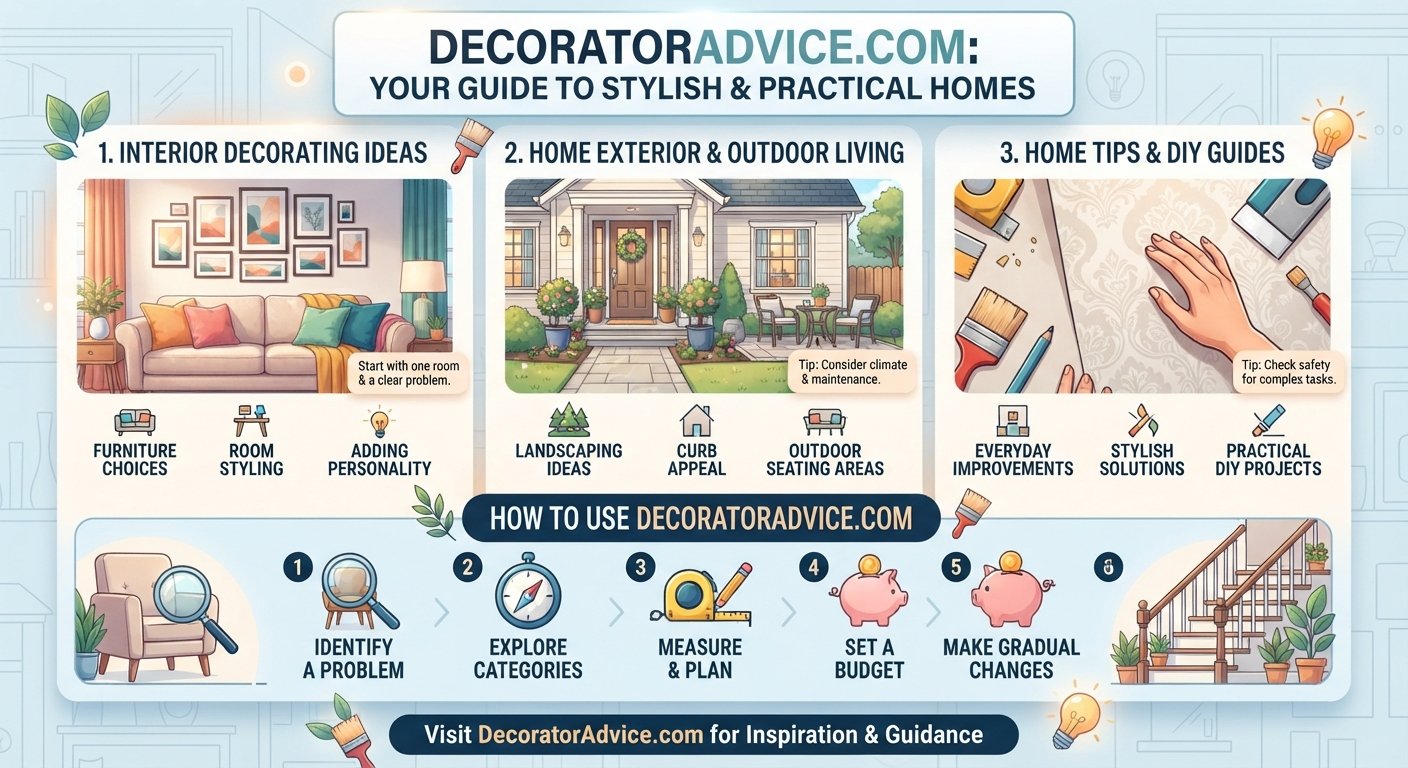
According to its About page, the website organizes its content around three main areas: decorating your home, improving home exteriors, and finding useful home tips and guides. These categories provide a starting point for readers who want ideas for individual rooms, outdoor spaces, storage, and everyday home projects. citeturn186977search0
Unlike a traditional interior design consultation, an online decorating blog lets readers explore ideas at their own pace. You can compare styles, learn basic design principles, and decide which changes are realistic for your circumstances.
For example, someone with a small living room might look for furniture-arrangement ideas, while a homeowner preparing an outdoor seating area may prefer guidance about landscaping or deck design.
The important distinction is that inspiration is a starting point, not a personalized design plan. Your room dimensions, local climate, household needs, and budget should determine which recommendations make sense.
What Can You Find on DecoratorAdvice.com?
The website’s published categories cover several aspects of home design and improvement.
1. Interior Decorating Ideas
Interior decorating involves selecting and arranging colors, furniture, lighting, fabrics, artwork, and decorative accessories to create a cohesive space.
DecoratorAdvice.com’s home decorating section includes subjects such as furniture choices, room styling, and ways to add personality to living spaces. Its published articles also cover practical decorating projects and design inspiration. citeturn186977search1
When exploring interior decorating ideas, start by identifying the main problem you want to solve. A room may feel crowded, lack natural light, or simply need a more consistent color scheme.
You can then focus on changes that address that specific issue, such as:
- Rearranging furniture to improve movement.
- Using mirrors to reflect available light.
- Introducing cushions, throws, or curtains to add texture.
- Choosing a small number of complementary colors.
- Removing unnecessary objects from busy surfaces.
These changes are often easier to manage than replacing every piece of furniture.
2. Home Exterior and Outdoor Living
A home’s exterior influences its first impression, but it also affects how people use their outdoor space.
DecoratorAdvice.com identifies exterior design as one of its core content areas, including topics such as landscaping, curb appeal, and outdoor living. citeturn186977search0
Ideas in this area can be useful when planning a garden refresh, improving an entrance, or creating a more comfortable patio.
For instance, a small outdoor area may benefit from clearly defined zones for walking, seating, and plants. A larger garden might need a more deliberate combination of planting, lighting, paths, and maintenance planning.
Before starting an exterior project, consider drainage, weather exposure, maintenance requirements, and local building restrictions. A design that looks attractive in a photograph may not suit your property’s conditions.
3. Home Tips and DIY Guides
Practical home guides help readers break larger tasks into manageable steps.
The site’s home tips and guides category includes articles about everyday home improvements, styling, and practical solutions. citeturn186977search4
DIY projects can be a sensible way to personalize a home without hiring a contractor for every small change. Examples include repainting a suitable piece of furniture, replacing decorative cabinet hardware, organizing a cupboard, or creating a simple gallery wall.
However, DIY does not mean every job should be done without professional assistance. Electrical work, structural modifications, gas installations, and other safety-sensitive projects may require a qualified professional.
Use online guides to understand the process and plan your project, but check relevant safety requirements before beginning work.
How to Use DecoratorAdvice.com to Improve Your Home
The easiest way to benefit from decorating content is to follow a clear process rather than collecting ideas without putting them into practice.
Step 1: Identify One Room or Problem
Choose a specific area of your home that needs attention.
It might be a bedroom that feels cluttered, a living room with poor furniture placement, or an entrance that lacks storage.
Write down what you want to improve. For example, “make the living room easier to walk through” is more useful than simply saying “make the living room look better.”
A clear objective makes it easier to evaluate which suggestions are relevant.
Step 2: Explore the Most Relevant Category
Browse the website’s home decorating, exterior, or home tips sections according to your project.
Use descriptive search terms to narrow your research. If you are improving a compact bedroom, look for ideas involving space-saving furniture, storage, lighting, and suitable color combinations.
Do not assume that every recommendation will suit your home. Compare several ideas and look for solutions that address the same problem in different ways.
Step 3: Measure Before Buying Anything
Measurements can prevent expensive mistakes.
Before purchasing furniture, measure the available floor space, doorways, and access routes. Consider whether drawers, doors, and cupboards will open comfortably after the item is installed.
For a living room, mark the approximate dimensions of a proposed sofa or table on the floor using removable tape. This simple test helps you judge its scale before spending money.
Also account for walking routes and the location of windows, radiators, electrical outlets, and other fixed features.
Step 4: Create a Simple Design Plan
Choose a few elements that work together instead of attempting to change everything at once.
A basic plan might include:
- Two main colors and one accent color.
- One focal point, such as a fireplace or artwork.
- A combination of ambient and task lighting.
- Furniture sized appropriately for the room.
- A short list of accessories that add useful color or texture.
You do not need to follow these as strict design rules. They are practical starting points for creating a room that feels coordinated.
Step 5: Set a Budget
Decide how much you can comfortably spend before shopping.
Divide your budget into essentials and optional upgrades. For example, if a room needs better lighting and storage, prioritize those functional improvements before buying decorative accessories.
Consider low-cost alternatives such as rearranging existing furniture, repainting a suitable item, changing cushion covers, or using artwork you already own.
Keep a small allowance for unexpected costs, particularly when a project involves repairs or installation.
Step 6: Make Changes Gradually
Once your plan is ready, implement it in stages.
Start with the most important functional improvement, then assess the result before purchasing additional items. Taking photographs before and after each stage can help you identify which changes made the greatest difference.
This approach also reduces the risk of buying multiple accessories that do not work together.
Budget-Friendly Decorating Ideas Worth Trying
A home refresh does not have to begin with a major purchase. Often, small changes can make a space feel more intentional.
Refresh the Existing Furniture
Before replacing a table, chair, or cabinet, consider whether it can be improved.
Depending on its condition and material, cleaning, repainting, refinishing, or replacing worn hardware may extend its useful life. Check the manufacturer’s care instructions and use appropriate products for the surface.
Not every piece is worth restoring, but examining what you already own can reveal options you might otherwise overlook.
Improve Lighting in Layers
A single overhead light may leave a room feeling flat or create harsh shadows.
Where practical, combine general lighting with task lighting for reading, cooking, or working. Accent lighting can highlight artwork or architectural details.
Choose bulbs with a color temperature appropriate to the room’s purpose, and check that fixtures and bulbs are compatible.
Add Texture Without Overcrowding
A combination of materials can make a room feel warmer and more visually interesting.
For example, linen curtains, a textured cushion, a wooden side table, and a woven basket can introduce variety without requiring a completely new color scheme.
The aim is balance. Too many competing patterns, colors, or decorative objects can make a small space feel busy.
Use Storage as Part of the Design
Storage is not merely a practical concern; it influences how a room looks and functions.
Baskets, shelves, storage benches, and furniture with built-in compartments can help organize everyday belongings. Choose solutions that fit the room’s dimensions and are easy to maintain.
For families with children or pets, prioritize stable furniture, secure shelving, and materials that can tolerate regular use.
Is DecoratorAdvice.com Useful for Beginners?
A decorating website can be particularly helpful for beginners because it provides an opportunity to learn basic concepts before making purchases.
Instead of trying to master every interior design style, start with a few fundamentals: scale, color, lighting, circulation, and function.
Scale concerns how furniture and accessories relate to the size of a room. A large sectional sofa may dominate a narrow living room, while very small furniture can make a large room feel disconnected.
Color affects the overall atmosphere and how different elements relate to each other. Collecting a few reference images can help you identify colors you consistently like.
Lighting influences how colors and textures appear throughout the day. A paint sample that looks good in a shop may appear different under your home’s lighting.
Circulation refers to how people move through a space. Furniture should support normal activities rather than obstructing entrances and walking routes.
Function keeps design decisions grounded in everyday life. A beautiful coffee table is less useful if there is no room to move around it comfortably.
These principles are useful regardless of whether you prefer minimalist, traditional, contemporary, rustic, or eclectic interiors.
How to Evaluate Decorating Advice Before Following It
Online design advice can be inspiring, but individual recommendations still need to be assessed carefully.
Check Whether the Advice Fits Your Space
An arrangement that works in a large, bright room may not work in a small apartment with limited natural light.
Look for examples with similar room dimensions, ceiling heights, windows, and intended uses. If the original example differs significantly from your situation, adapt the idea rather than copying it exactly.
Consider Materials and Maintenance
A surface that looks attractive may require frequent cleaning or special treatment.
Before choosing flooring, upholstery, paint, or outdoor materials, consider durability, maintenance, moisture exposure, and how heavily the area will be used.
If an article recommends a product, confirm its specifications through the manufacturer or another reliable source before purchasing it.
Distinguish Inspiration From Professional Advice
Decorating suggestions are not a substitute for professional guidance when a project involves structural safety, building regulations, electrical systems, plumbing, or other technical requirements.
For those tasks, consult the appropriate qualified professional and verify local requirements.
Verify Commercial Recommendations
If a decorating article links to products or services, review the specifications, current prices, return policies, and any relevant disclosures.
A product appearing in an article does not automatically mean it is the best option for your needs. Compare alternatives and evaluate them against your budget and requirements.
DecoratorAdvice.com Compared With Other Design Resources
Different resources serve different purposes. The best choice depends on whether you need inspiration, detailed technical guidance, product information, or personalized design assistance.
| Resource type | Best use | What to consider |
|---|---|---|
| DecoratorAdvice.com | Exploring home decorating and improvement ideas | Check each article’s suitability and supporting information |
| Manufacturer documentation | Understanding product specifications and care | Confirm the exact product and model |
| Professional interior designer | Planning a tailored space or larger redesign | Review qualifications, portfolio, scope, and fees |
| DIY tutorials | Learning how to complete specific tasks | Verify safety requirements and skill level |
| Building or safety authorities | Checking applicable rules and technical requirements | Confirm local jurisdiction and current guidance |
These options are complementary rather than mutually exclusive. A reader might discover a decorating concept online, verify the technical details with a manufacturer, and hire a professional for installation.
Frequently Asked Questions
1. What is DecoratorAdvice.com?
DecoratorAdvice.com is a home décor and improvement blog covering interior decorating, home exteriors, and practical home tips. Its stated purpose is to make home design more approachable through ideas and guides. citeturn186977search0
2. What kind of decorating advice can you find on DecoratorAdvice.com?
The website includes content related to room styling, furniture, outdoor living, landscaping, DIY projects, and everyday home improvements. The available material can be explored through its home decorating and home tips categories. citeturn186977search1turn186977search4
3. Is DecoratorAdvice.com useful for beginners?
It may be a useful starting point for beginners who want to explore decorating ideas and practical projects. Readers should evaluate individual recommendations, confirm product details, and seek professional guidance for work involving technical or safety requirements.
4. Can I use DecoratorAdvice.com to decorate on a budget?
You can explore ideas that may help with planning affordable home improvements. To keep costs under control, set a budget, reuse suitable items, measure before buying, compare prices, and prioritize functional improvements over unnecessary purchases.
5. How can I tell whether home improvement advice is reliable?
Look for clear explanations, appropriate evidence, relevant author expertise, and links to original sources when technical claims are made. Confirm product specifications with manufacturers and verify building or safety requirements through the relevant authorities.
Conclusion
DecoratorAdvice.com offers a starting point for exploring interior decorating, exterior improvements, and practical home ideas. Its content categories can help readers discover approaches to room styling, outdoor spaces, and everyday projects without immediately committing to a major renovation.
The most effective way to use decorating advice is to connect inspiration with a clear plan. Identify a specific problem, measure your space, set a realistic budget, and evaluate each recommendation against your needs.
Ready to improve your home? Explore the relevant category on DecoratorAdvice.com, choose one achievable project, and turn the most useful idea into a practical plan for your space.
